Diaphragm Couplings: How to Choose the Right Size and Material?
Position:Home >> News >> Industry News
Industry News
2024-11-15 08:13:41
219
A guide to the selection of dimensions and materials for diaphragm couplings As a core component of mechanical transmission systems, diaphragm couplings are widely used in the industrial field due to their high torque transmission capacity, excellent torsional stiffness and low inertia characteristics. The scientific selection of its size and material is a key link to ensure the reliability of the transmission system and improve the transmission efficiency. |
I. Key Points for Size Selection |
The size selection should be precisely matched based on the actual working conditions of the transmission system. The core considerations include:
Core parameter matching: Based on the rated power, speed range and maximum torque value of the transmission system, calculate the nominal torque and allowable speed of the required coupling to ensure that the load-bearing capacity meets the short-term peak load and long-term stable operation requirements. Connection method adaptation: Select the corresponding interface form based on the shaft end structure (such as keyway type, conical hole type, expansion sleeve type, etc.), and at the same time confirm whether the shaft diameter range matches the shaft end dimensions of the motor and load equipment. Installation space limitation: For the radial and axial installation space in the layout of the measuring equipment, select models with lengths and outer diameters that meet the space requirements to avoid interference with surrounding components. Deviation compensation requirements: Based on the possible axial, radial and angular deviations in the system, select the size specifications with corresponding compensation capabilities to ensure the smoothness of transmission. |
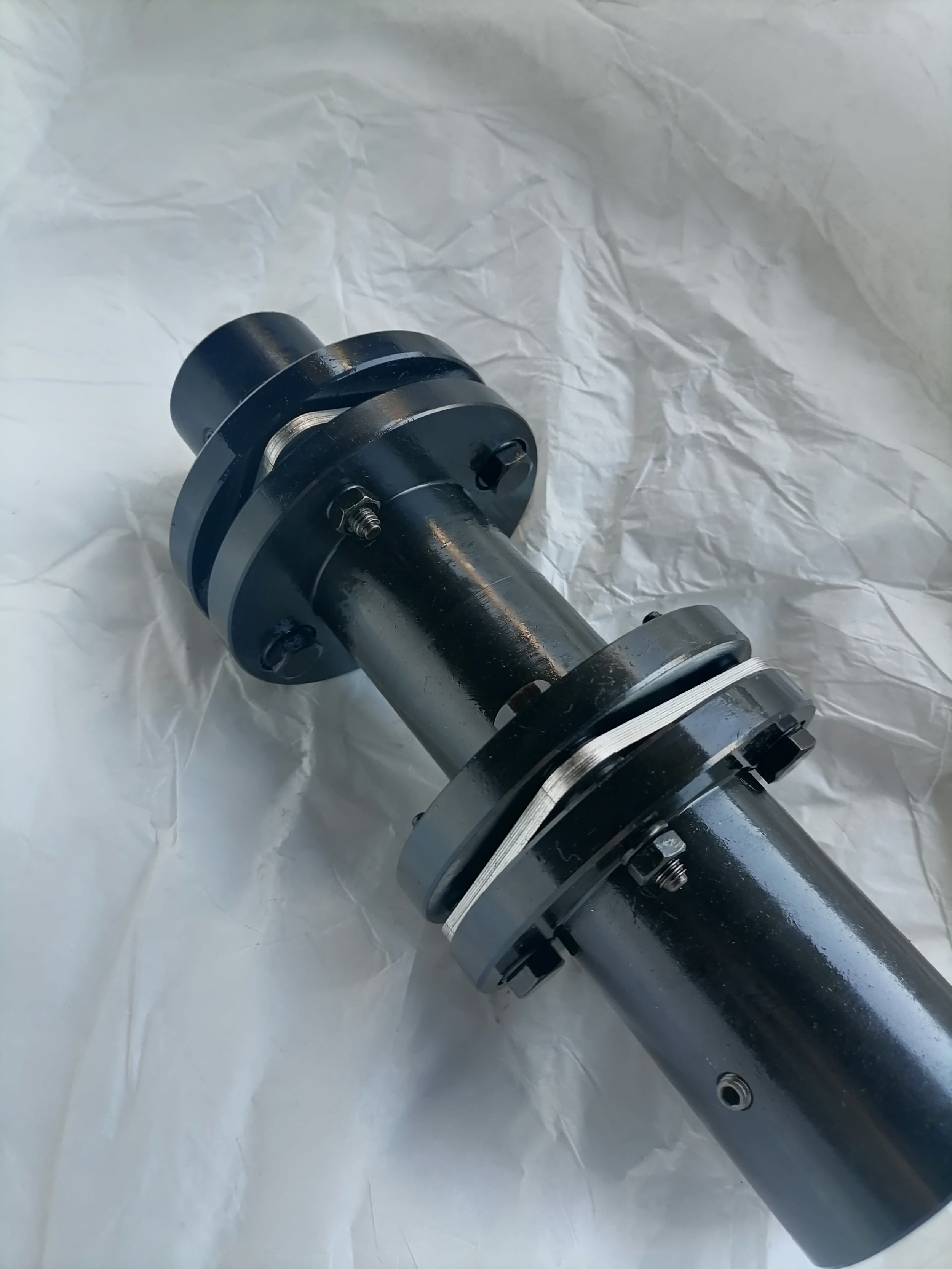 Figure: Schematic diagram of the structure and dimensional parameters of the diaphragm coupling |
Ii. Material Selection Strategy |
Common materials include steel, aluminum alloy, stainless steel, etc. The selection should be based on the characteristics of the working conditions and performance requirements
Carbon steel/alloy steel: It features high strength and high torsional stiffness, making it suitable for high-torque and heavy-load working conditions (such as metallurgical and mining equipment). However, it is relatively heavy, so dynamic balance design should be noted. Aluminum alloy: It has significant advantages in lightweight, with low inertia and good heat dissipation. It is suitable for high-speed transmission systems (such as precision machine tools and fans), but its load-bearing capacity is lower than that of steel, making it unsuitable for heavy-duty scenarios. Stainless steel: It has excellent corrosion resistance and high and low temperature resistance, and is suitable for damp, dusty and corrosive environments (such as chemical equipment and food machinery), but its cost is relatively high. Economic balance: Under the premise of meeting performance requirements, comprehensively consider material costs, processing difficulty and service life, and give priority to choosing the solution with a higher cost performance. |
The size and material selection of diaphragm couplings need to achieve "working condition adaptation" and "performance balance" : the size should precisely match the power, space and deviation requirements, and the material should take into account strength, environmental adaptability and economy. At the same time, it is necessary to ensure compatibility with other components of the transmission system and lay a foundation for the stable operation and efficiency improvement of the entire mechanical system through scientific selection. |

 Diaphragm Couplings: How to Choose the Right Size and Material?-Industry News-Speed Torque Transmission Technology Co-Deep plowing in the field of couplings, integrating R&D, production and sales
 English
 Chinese
 Russian